How an aerobic system is different
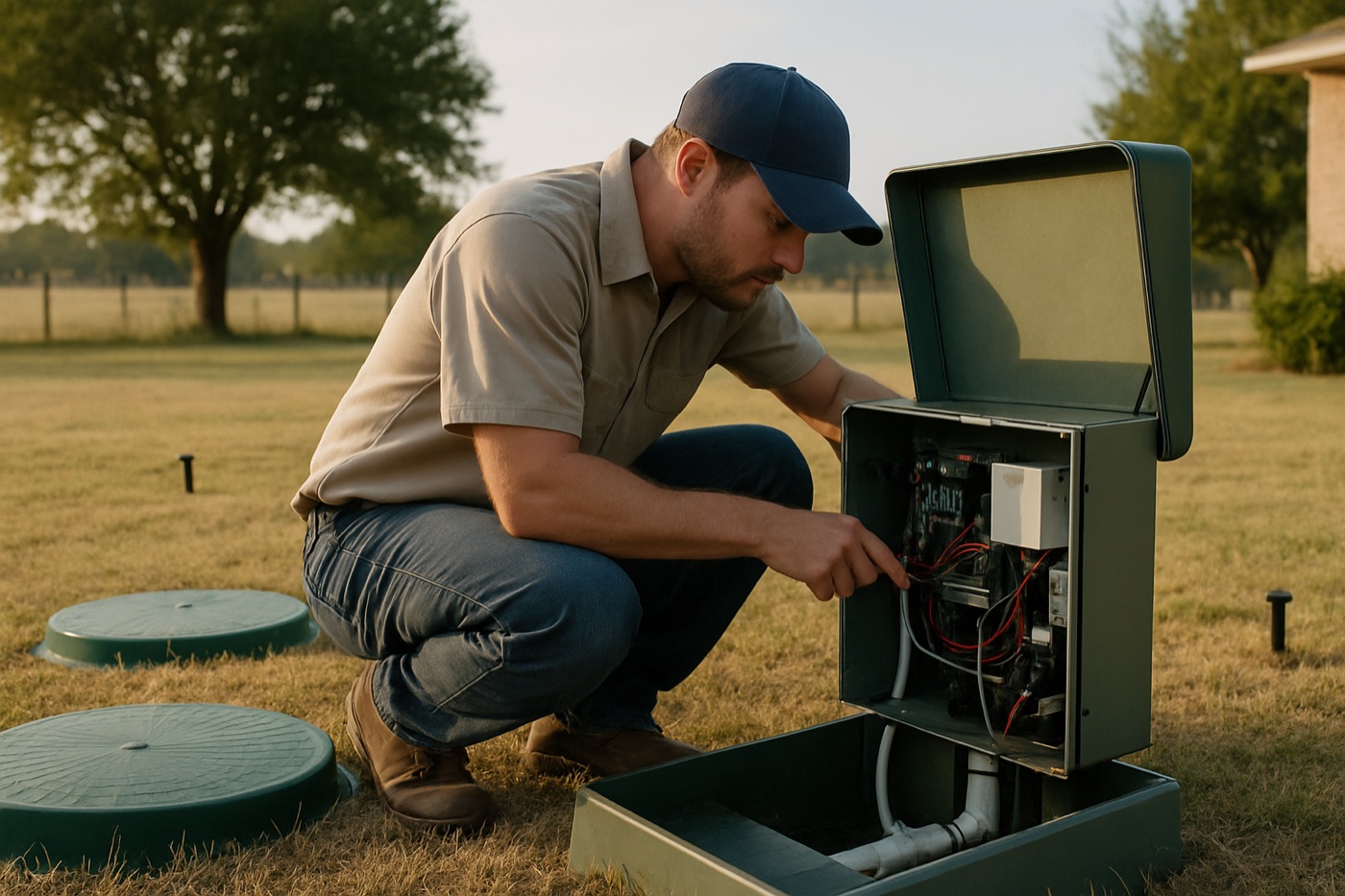
A conventional system is a tank and gravity. An aerobic treatment unit (ATU) is a small sewage plant: an air compressor feeds oxygen to bacteria that clean the water, a chlorinator disinfects it, and a pump sprays the treated water over your yard. More treatment, smaller footprint — which is why so many newer Caldwell County builds and smaller lots have them. The trade: moving parts. Compressors burn out, sprayer heads clog, floats stick, chlorine runs empty. A conventional system fails slowly; an aerobic system fails the week the compressor dies.
What the contract covers — and why it’s required
Texas requires ATUs to be inspected three times a year by a licensed maintenance provider, and Caldwell County tracks whether yours are happening. A proper contract ($250–$400/yr) covers those three visits: compressor and aeration check, sprayer function, chlorine supply and residual, float and alarm test, sludge level, and the paperwork filed with the county. Minor adjustments happen on the spot; real repairs — a $450–$1,200 sprayer pump, a compressor rebuild — get quoted before anyone proceeds. The contract is what keeps a $30 chlorine problem from becoming a $900 pump problem eight months later.
The homeowner’s share of the job
Between visits: keep chlorine tablets stocked (calcium hypochlorite made for septic — NEVER pool tablets, which can be dangerous in septic chlorinators and don’t disinfect properly), don’t plant or park over the spray field, don’t ignore the alarm light, and treat the system like the sewage plant it is — no grease down the drain, no "flushable" wipes, easy on the antibacterial cleaners that kill the bacteria doing your treatment. Ten minutes a month, and your three inspections a year become non-events.
Why compliance attention is rising here
Caldwell County sits on the Plum Creek watershed, and the creek’s impaired-waters status keeps septic performance on the county’s radar. Aerobic systems spray treated water on the surface — which is exactly why the state wants them inspected and why lapsed contracts draw letters. Staying current is cheap; the alternative rarely is.
Common questions
Is aerobic maintenance really mandatory?
Yes. Texas requires three inspections per year on aerobic systems by a licensed provider, and Caldwell County tracks compliance. A lapsed contract can mean county enforcement — and usually means small problems go unnoticed until they’re big ones.
What does a contract cost?
$250–$400 per year around Lockhart, covering all three required inspections, testing, minor adjustments and county paperwork. Repairs and parts (sprayer pumps $450–$1,200) are quoted separately before work happens.
Can I use pool chlorine tablets?
No. Pool tablets (trichlor) are chemically different, can create dangerous conditions in septic chlorinators, and don’t disinfect effluent properly. Use calcium hypochlorite tablets rated for septic systems — any farm store around Lockhart carries them.
My alarm light is on. Is that an emergency?
It’s a "call today" — not necessarily a crisis, but never something to ignore. Usually it’s a float, a tripped breaker, or a compressor issue. Silence the buzzer if it has a switch, minimize water use, and call (737) 264-6243.
Does an aerobic tank still need pumping?
Yes — sludge still accumulates. Your maintenance inspections track the level, so you pump when it actually needs it rather than guessing. Typically every 3–5 years, like any tank.
Get on a maintenance contract
Tell us where the property is and what brand of system if you know it (it’s on the control panel). A licensed provider will call you back — usually the same day.
Got it — expect a call back shortly.